

Sign In
Sign in now to access exclusive deals and a seamless shopping experience on Cheaper Connection. Fast, secure, and hassle-free checkout!
Buying a used iPhone in Malaysia? Learn what True Tone is, how to check if it works, why it may disappear, and whether you should worry before buying.
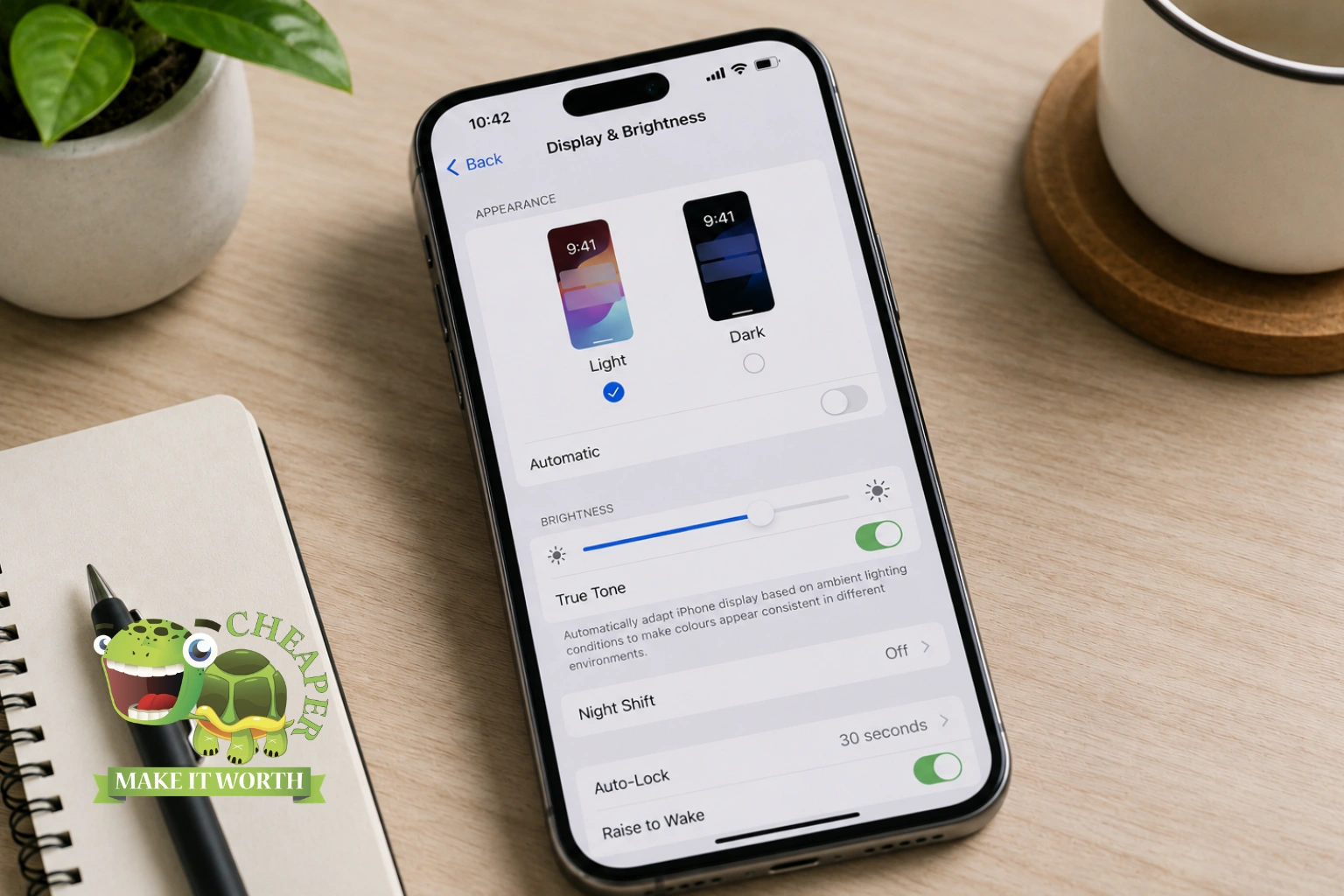
If you are buying a used iPhone in Malaysia, one term you will often see in buyer checklists is True Tone. Many sellers mention it. Many buyers ask about it. But not everyone actually understands what it means, why it matters, and whether a missing True Tone feature should stop you from buying the phone.
The short answer is this: True Tone itself is not the most important feature on an iPhone, but it can be a very useful clue about the display history of the device. If True Tone is missing on a used iPhone, it may suggest that the screen was replaced, that the repair was not transferred correctly, or that the phone has had previous work done. That does not automatically make the phone bad, but it does mean you should ask more questions before paying.
For a used iPhone shop or buyer in Malaysia, details like this matter because the second hand market is full of devices with different histories. Some are clean and original. Some have had battery changes, display replacements or camera repairs. Some are still perfectly fine to buy if the price reflects the condition. Others are overpriced for what they are. Understanding True Tone helps you make that distinction.
This guide explains what True Tone on iPhone means, how to check it, why it may disappear, and whether you should still buy a used iPhone if True Tone is missing. If you are new to used iPhone buying, you may also want to read our full guide on how to check a used iPhone condition before buying in Malaysia.
True Tone is an iPhone display feature that adjusts the screen’s color temperature based on the surrounding light. In simple terms, it helps the display look more natural and comfortable to your eyes in different lighting conditions.
For everyday users, True Tone is mostly about viewing comfort. But for used iPhone buyers in Malaysia, it matters for another reason: if True Tone is missing, it can be a sign that the display was replaced or that the repair history needs to be checked more carefully.
So when buyers ask “Does the phone still have True Tone?”, they are not just being picky about display settings. They are also trying to understand whether the screen is likely original, whether the device has had prior repair work, and whether the asking price still makes sense.
True Tone uses the iPhone’s sensors to detect the color of the surrounding light and then adjusts the display so the screen looks more natural in that environment. Under warmer indoor lighting, the display may look slightly warmer. Under cooler lighting, the screen may adjust differently.
This is not the same as Night Shift. Night Shift intentionally makes the screen warmer to reduce blue light, especially at night. True Tone is more about balancing the display so whites and colors look more natural in changing environments.
Some users love it because it makes the display feel softer and more comfortable. Some users turn it off because they prefer a cooler or more consistent screen tone. That is fine. The bigger point for buyers is not whether you personally use True Tone every day, but whether the phone still supports it properly.
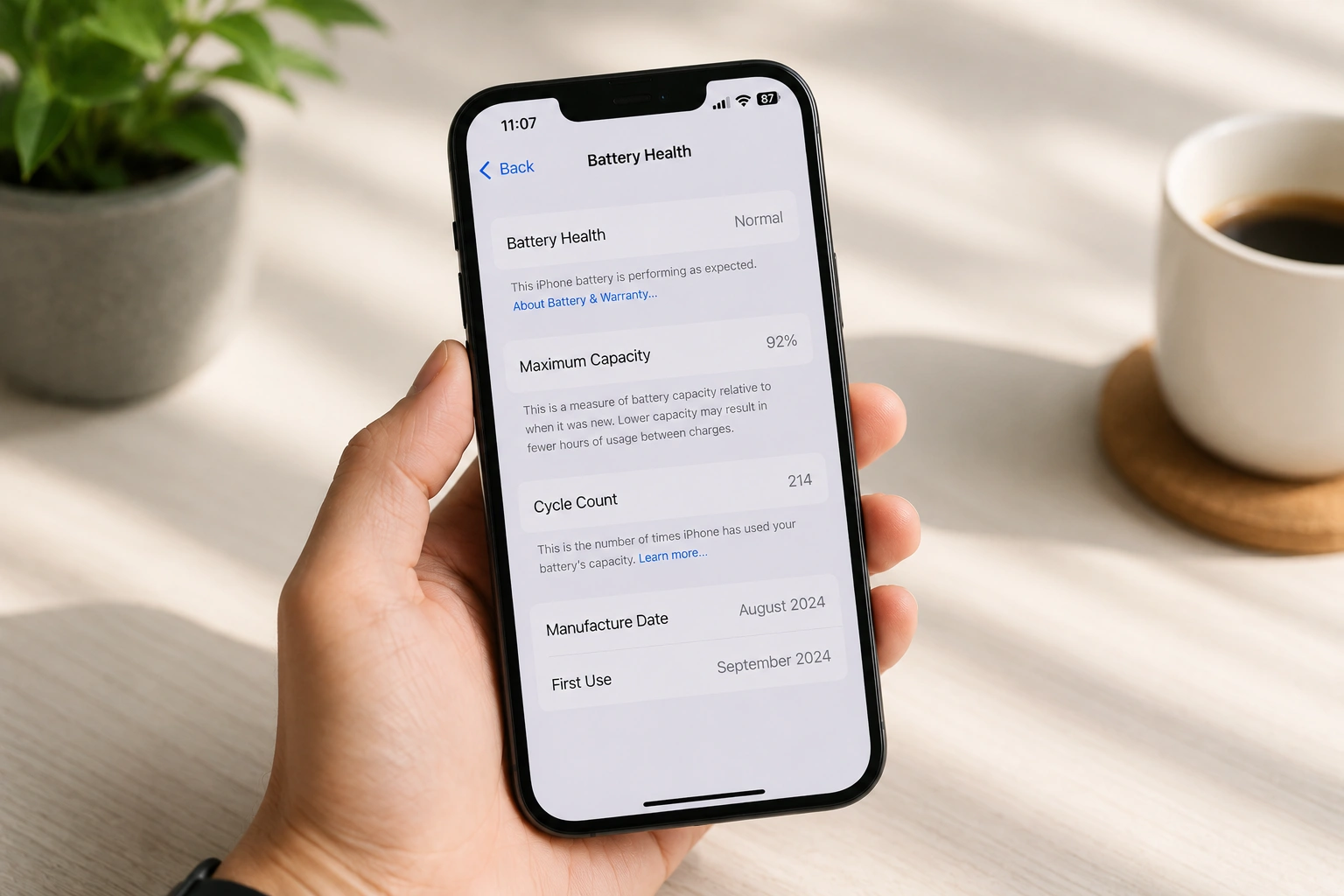
In the used iPhone market, buyers are not only buying a model. They are buying a device history. Two phones with the same model number can be very different in value depending on whether the battery is healthy, whether the display is original, whether Face ID works, and whether the phone has been repaired before.
True Tone matters because it can help you spot these differences. A used iPhone with working True Tone does not automatically mean the screen is original and perfect. But a used iPhone with missing True Tone should at least make you ask more questions, such as:
For a buyer in Malaysia, this matters because the used market includes all kinds of phones: shop-traded devices, owner-used devices, repaired devices, refurbished units and imported stock. A seller may still describe all of them simply as “used iPhone”. That is why small technical checks like True Tone can give you a more honest picture.
The good news is that checking True Tone is usually simple. Here is the basic method:
If the iPhone model supports True Tone and the feature is present, you should see the toggle there. You can switch it on and off to see whether the display tone changes slightly.
You can also access display controls through Control Centre on some models and compare how the screen looks with True Tone on versus off. The difference may not be dramatic, but the point is to confirm that the feature exists and responds normally.
This is the question many buyers are really asking. If the True Tone toggle is missing, there are a few possible reasons. The most common one is screen replacement history.
On many iPhone models, the display contains data tied to the device. When the screen is replaced, proper transfer or calibration work may be needed for features such as True Tone to continue working normally. If the repair was done without the correct process, True Tone may disappear even if the replacement screen looks visually fine.
Common reasons for missing True Tone include:
That does not always mean the phone is fake or unusable. Some used iPhones with missing True Tone can still work perfectly well for normal use. But the missing feature tells you that the phone may no longer be in fully original display condition, and that should affect how you evaluate the price and risk.
Not always. This is where many buyers oversimplify the issue. A used iPhone with missing True Tone is not automatically a “no”. But it should no longer be treated the same as a clean-condition unit with fully original display features and no repair questions.
Think of it this way:
| Situation | What It May Mean | Buyer Action |
|---|---|---|
| True Tone works normally | Good sign, but not full proof of originality | Still continue checking battery, Face ID, camera, charging and IMEI |
| True Tone missing, seller explains screen was replaced | Repair history exists | Check display quality carefully and make sure the price is adjusted fairly |
| True Tone missing, seller has no idea why | Risk is higher | Be more cautious and inspect the phone more thoroughly before paying |
| True Tone missing plus Face ID / camera / display issues | Possible heavier repair history or damage | Usually safer to walk away unless the price is very clearly worth the risk |
So the better question is not “Can I buy it?” but “Should I pay full clean-condition price for it?” In many cases, the answer is no. A used iPhone with missing True Tone should usually be valued more carefully because it may have screen replacement history and may not be equivalent to a cleaner unit.
Not necessarily. This is one of the biggest misunderstandings in the used iPhone market. Missing True Tone does not automatically prove that the screen is fake. It may simply mean the screen was replaced and the repair process did not preserve the feature properly. It may also indicate a different type of display history that needs clarification.
That said, a missing True Tone option should make you look harder at the display quality itself. Ask yourself:
If the phone has missing True Tone but the display quality is excellent, the price is fair, Face ID works, battery is healthy and the rest of the phone is clean, it may still be an acceptable buy for some users. But if the seller wants near-original price while hiding repair history, that is where buyers should be careful.
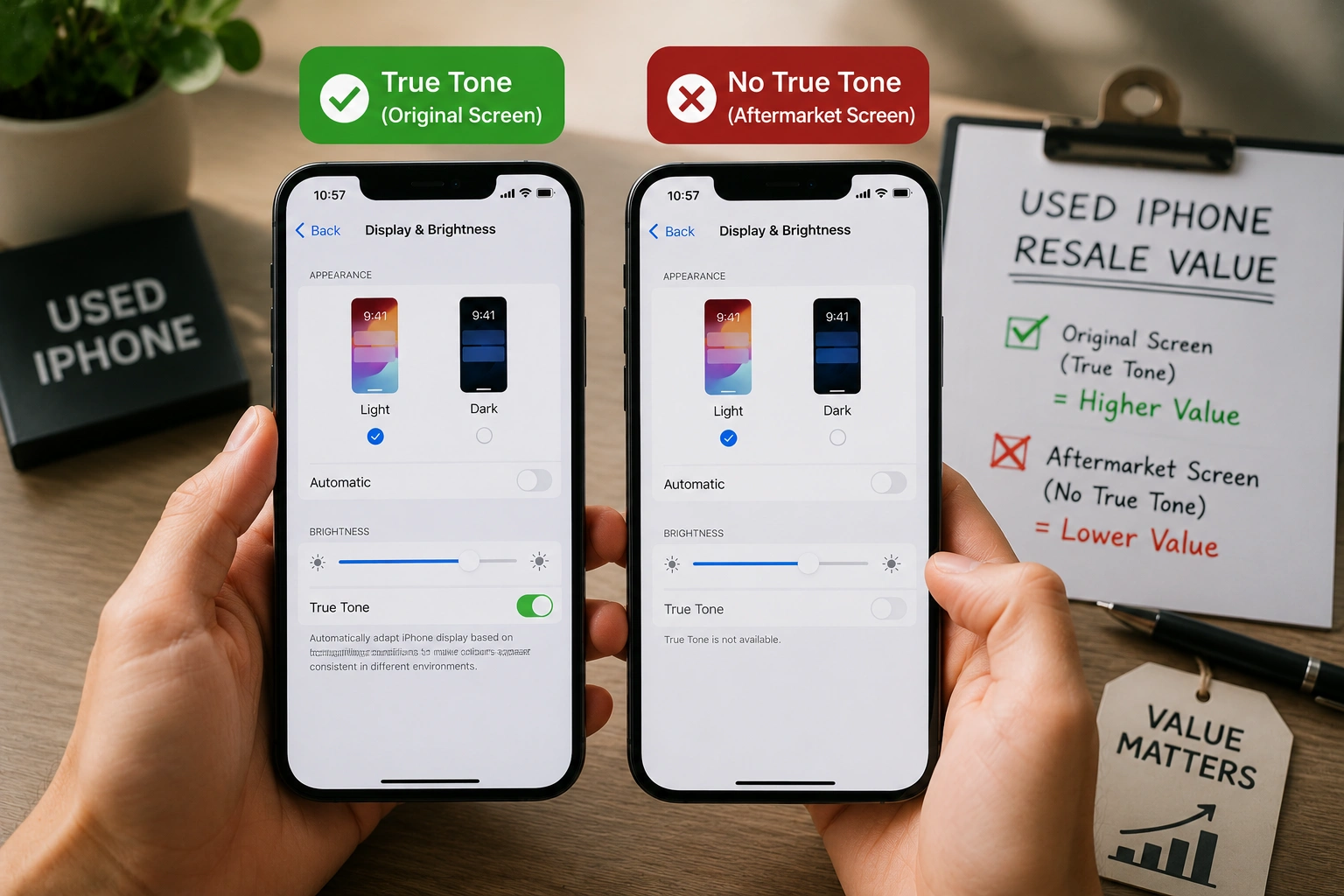
In Malaysia’s used iPhone market, value is not only about whether the phone works today. It is also about buyer confidence. A used iPhone with fully working True Tone, Face ID, healthy battery and clean history is easier to sell later because buyers feel safer. A phone with missing True Tone may still work fine, but it often invites more questions and may weaken resale confidence.
This matters for both buyers and sellers:
If you are choosing between two similar used iPhones and one has working True Tone while the other does not, the True Tone unit is generally the safer and easier one to choose if the rest of the condition is similar.
True Tone is only one part of a proper used-iPhone inspection. Do not let it become the only thing you check. A smart buyer should still review the full device condition before paying.
| Area to Check | Why It Matters | What To Test |
|---|---|---|
| Battery health | Affects battery life, heat and long-term usability | Check Battery Health percentage and service warning |
| Face ID | Important security and value feature | Set up and test unlock properly |
| Camera | Repair issues can affect image quality and resale value | Test front / rear camera, autofocus, video and mic |
| Charging | Loose ports and charging issues are common used-phone problems | Plug in and check charging stability |
| Network / Wi-Fi / Bluetooth | Daily usability | Test SIM detection, Wi-Fi and Bluetooth connection |
| IMEI / iCloud | Essential ownership and lock checks | Verify device details and iCloud sign-out status |
If you want a more complete buying flow, read our related guides on how to check original iPhone before buying in Malaysia, how to check used iPhone condition before buying and used vs refurbished iPhone in Malaysia.
Yes, but in the right way. True Tone should not be treated as a random cosmetic checkbox. It should be treated as part of the device history story. If it is working, that is a helpful positive sign. If it is missing, that is a signal to ask more questions, inspect the display more carefully and negotiate the price more realistically.
A missing True Tone feature does not automatically make a used iPhone bad. But it does remove one layer of confidence, especially if the seller cannot explain why. In a market where many buyers want clean-condition used iPhones that feel as close to original as possible, that matters.
So the smartest approach is this:
That is how you avoid overpaying for a second hand iPhone in Malaysia.
If you are planning to buy a used iPhone and want help checking device condition, battery health, display issues or whether the phone is worth the asking price, Cheaper Connection can help you inspect the details before you decide.
👉 Contact Cheaper Connection
👉 Read Used iPhone Condition Guide
👉 Read Original iPhone Checking Guide
👉 Read Used vs Refurbished iPhone Guide
What is True Tone on iPhone?
True Tone is a display feature that adjusts the screen’s color temperature based on surrounding light so the display looks more natural and comfortable to the eyes.
How do I check if True Tone is available on a used iPhone?
Go to Settings > Display & Brightness and look for the True Tone toggle. If it is missing, ask the seller about screen replacement or repair history.
Does missing True Tone mean the iPhone screen is fake?
Not always. It can indicate screen replacement or repair history, but it does not automatically prove the screen is fake. You should inspect the display quality and overall device condition before deciding.
Should I avoid buying a used iPhone without True Tone?
Not necessarily, but you should be more cautious. Make sure the price reflects the condition, and check battery health, Face ID, camera, display quality and other functions carefully.
Why does True Tone matter when buying used iPhone in Malaysia?
Because it can be a useful clue about whether the screen may have been replaced and whether the phone has repair history that affects value, trust and future resale.
